Regulatory developments continued across major jurisdictions this week, with Japan
implementing new stablecoin rules, the UK consulting on retail fund exposure to
crypto-linked products, Taiwan exploring blockchain-based gold tokenization
initiatives, Germany’s 2024 Bitcoin liquidation remaining a subject of market analysis,
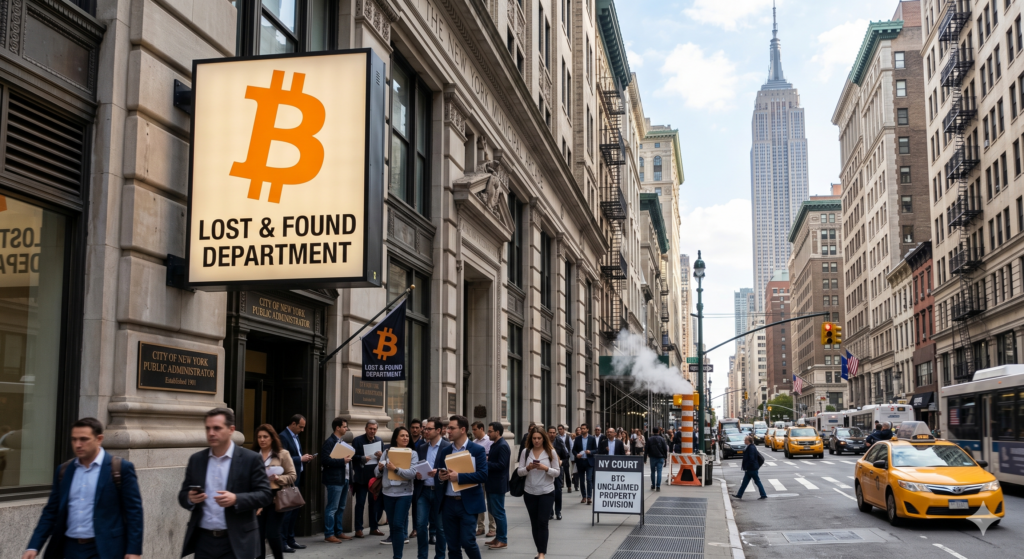
and a New York court reviewing an unusual claim involving dormant Bitcoin wallets.
Japan: Payment Services Act Amendment
Japan’s Financial Services Agency has finalized regulatory amendments that
recognize qualifying foreign-issued stablecoins as electronic payment instruments
under the Payment Services Act, removing eligible instruments from treatment as
securities under the Financial Instruments and Exchange Act.
The framework allows licensed domestic intermediaries to handle qualifying foreign-
issued stablecoins within Japan, provided issuers satisfy regulatory equivalence
requirements relating to licensing, supervision, reserve management, audit
standards, and anti-financial-crime controls.
Under the broader Payment Services Act amendments, trust-type electronic payment
instrument issuers may hold up to 50% of backing assets in short-term Japanese
government bonds. For qualifying foreign stablecoins, redeemability is assessed by
the FSA on a case-by-case basis.
The core ordinance entered into force on June 1, 2026, with full enforcement of the
associated Cabinet Office Ordinances scheduled for June 13, 2026.
United Kingdom: Retail Crypto Asset Caps
The UK Financial Conduct Authority proposed allowing authorized retail funds to
allocate up to 10% of their property to crypto-linked exchange-traded notes.
The regulatory shift treats these products as investable vehicles provided they align
with a fund’s disclosed risk profile, while professional qualified investor schemes
remain free of caps.
Opposing constraints apply to alternative structures, as the regulator explicitly seeks
feedback on blocking long-term asset funds and certain retail fund-of-funds from
holding these assets.
Direct possession of cryptocurrencies remains explicitly prohibited within authorized
funds, pending a future review of safeguarding frameworks.
The regulatory watchdog issued this framework within its 52nd quarterly consultation
paper, establishing five-week public comment window.
Taiwan: Bank of Taiwan Explores Gold Tokenization
The Bank of Taiwan is exploring the use of blockchain technology to support
potential gold-tokenization initiatives involving physical gold holdings.
Taiwan’s goldreserves totalled approximately 423.94 metric tons as of late 2025,
making them among the largest in Asia.
Supporters argue that tokenized gold could improve accessibility and enable
fractional ownership, while industry observers note that broader adoption would
require robust custody arrangements and regulatory clarity. Current reporting
indicates that the initiative remains in an exploratory stage and has not been
announced as a full-scale implementation.
Germany: Review of 2024 Bitcoin Liquidation
German authorities sold approximately 49,858 Bitcoin seized in connection with the
Movie2k criminal case during June and July 2024. The liquidation generated roughly
€2.6 billion in proceeds, which remain subject to legal processes associated with the
case.
The sale has continued to attract market attention as Bitcoin’s price has fluctuated
since the liquidation. However, the primary purpose of the disposal was the
management of seized criminal assets under applicable legal procedures rather than
a long-term investment strategy.
United States (New York): Court Reviews Dormant Bitcoin Wallet Ownership
Claim
A New York court is reviewing a lawsuit filed by an anonymous plaintiff seeking
ownership rights over 39,069 dormant Bitcoin wallets under an interpretation of New
York’s lost-property laws.
The plaintiff argues that certain long-inactive digital assets may qualify as
abandoned property if their owners fail to assert ownership within a statutory period.
According to court filings, the plaintiff claims to have identified the wallets using a
proprietary algorithm designed to detect inactive addresses.
The addresses were reportedly submitted to a New York police precinct and later
notified through blockchain-based OP_RETURN messages directing potential
owners to an abandonment notice.
The wallets named in the lawsuit include addresses that public researchers have
linked to early Bitcoin-era holdings, including the 1Feex wallet associated in public
reporting with the 2011 Mt. Gox hack and addresses exhibiting so-called Patoshi-era
characteristics that some analysts associate with Bitcoin’s earliest mining activity.
An opposing amicus filing argues that the cited statute was designed for tangible
property placed into physical custody and cannot be extended to publicly visible
blockchain addresses.
The filing further contends that inactivity does not establish abandonment,
particularly where owners may have lost access to private keys rather than intentionally relinquished ownership.
The court has paused further proceedings while it considers procedural and legal
questions surrounding the case, including whether to admit the amicus brief.
No determination has been made regarding the validity of the ownership claims, and
the underlying legal theory remains untested in the context of blockchain assets.
Wrapping Up – This week ends here.
Japan implemented new stablecoin regulations that recognize qualifying foreign
issued stablecoins as electronic payment instruments under the Payment Services Act.
The UK FCA is consulting on a proposal that would allow certain authorized funds to
allocate up to 10% of assets to crypto-linked cETNs.
The Bank of Taiwan is exploring blockchain-based applications involving gold assets,
though current reporting suggests the initiative remains in an exploratory or pilot phase.
Germany’s 2024 sale of nearly 50,000 seized Bitcoin continues to be referenced in
discussions about government management of digital assets.
A New York court is reviewing an unusual lawsuit involving dormant Bitcoin wallets,
while legal challenges question whether existing lost-property laws apply to
blockchain addresses.
With thanks to Dean Shuker and Aviv Barkan.