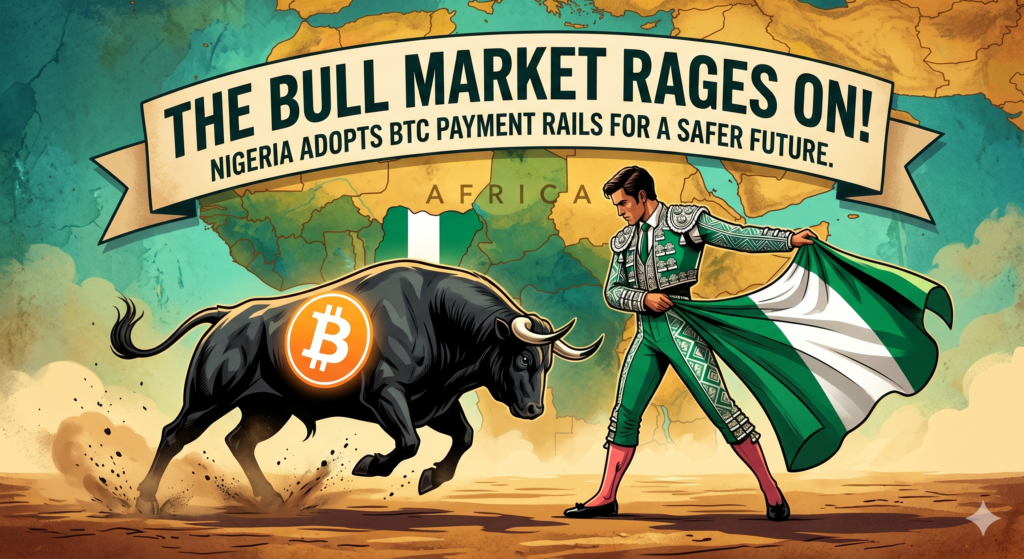
Morgan Stanley has established institutional management for stablecoin reserves, while Singapore proposed reducing bank capital costs for public blockchain assets. These developments coincide with Nigerian fintechs deploying on-chain rails to bypass traditional infrastructure and a global transition toward digital ledgers. As EU member states negotiate centralized oversight ahead of the July MiCA deadline.
Bernstein’s Bull Market Thesis
Bernstein’s latest research indicates that the crypto market has entered a structurally longer bull cycle. Bernstein’s report predicts that 60% of the supply is currently held by long-term investors. Institutional adoption has accelerated via new distribution channels at Morgan Stanley and Charles Schwab, while the global stablecoin supply has reached a record $300 billion. MicroStrategy has also introduced its “Stretch” (STRC) digital credit product, providing institutions with a high-yield, Bitcoin-backed income asset.
Morgan Stanley is Backing Stablecoins
Morgan Stanley Investment Management has launched the Stablecoin Reserves Portfolio (ticker: MSNXX), a money market fund specifically designed to manage cash reserves for payment stablecoin issuers. The fund invests in cash and short-term U.S. Treasury securities with maturities of 93 days or less to meet the liquidity requirements of the GENIUS Act. Managed by the Global Liquidity team, the portfolio is structured to maintain a stable $1.00 net asset value.
Singapore Reclassifies the Public Blockchain
The Monetary Authority of Singapore (MAS) has proposed a framework allowing banks to hold and issue digital assets on public blockchains. This move shifts qualifying assets from a punitive high-risk category to a more efficient, risk-sensitive framework. To qualify, banks must prove they have mitigated technical risks like 51% attacks. During this test period, locally incorporated banks are limited to an exposure cap of 2% and an issuance cap of 5% of their Tier 1 capital.
Lagos Market Test with Blockchain
Aubrey Niederhoffer, a 19-year-old Thiel Fellow, raised $7.3 million in seed funding to launch Swoop, a food delivery and fintech platform based in Lagos, Nigeria. The round was led by Variant with participation from Zero Knowledge Ventures and Base Capital. Swoop uses food delivery as a user acquisition tool for a “super app” that integrates blockchain-based payment rails, targeting regions with high mobile penetration but lacking legacy banking infrastructure.
EU Capitals Resist Central Crypto Oversight
EU member states are currently negotiating a proposal to centralize crypto-asset supervision under the European Securities and Markets Authority (ESMA). While the European Commission and the ECB support central oversight, a compromise note suggests a “targeted approach” where only the largest firms fall under ESMA’s control. As the July 1, 2026, deadline approaches, full MiCA licensing becomes mandatory; ESMA requires any firm operating without a valid license to have an active, verified “wind-down plan” in place to protect consumer assets.
Wrapping Up.
This week, Morgan Stanley launched a money market fund for stablecoin reserves and Singapore proposed reducing capital costs for banks utilizing public blockchains. In Nigeria, on-chain payment rails are being deployed for retail services, while European member states negotiate centralized oversight ahead of the MiCA deadline. These developments represents a technical transition of financial operations onto digital ledgers as regulatory frameworks begin to standardize globally.
With thanks to Dean Shuker and Aviv Barkan